Subterranean termite pressure in Gwinnett County remains high throughout the year due to the dense native oak and loblolly pine canopies, heavy seasonal humidity, and red clay soils that retain continuous moisture. In…
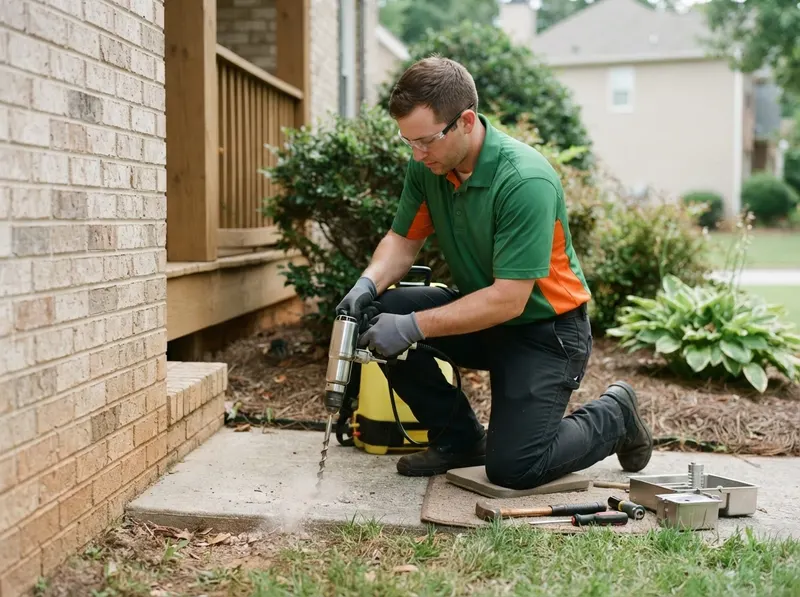
Subterranean termite pressure in Gwinnett County remains high throughout the year due to the dense native oak and loblolly pine canopies, heavy seasonal humidity, and red clay soils that retain continuous moisture. In mature riverfront subdivisions such as Rivermoore Park, The River Club, and Edinburgh, homes adjacent to the Chattahoochee River corridor encounter aggressive foraging from eastern subterranean colonies living deep in the woodland subsoil. Structural foundations throughout Olde Atlanta Club, Laurel Springs, and Lansdowne frequently feature mixed construction, such as walk-out daylight basements adjoined to poured concrete slabs, which creates concealed expansion joints where subterranean foragers enter sill plates unseen. Conventional surface perimeter sprays fail to stop these wood-destroying insects; halting them requires continuous liquid termiticide barriers applied along foundation block walls alongside networked baiting stations positioned along exterior drip lines.
Selecting between comprehensive continuous liquid barrier applications and exterior baiting systems depends on the architecture and foundation accessibility of the property. A non-repellent liquid barrier creates an undetectable continuous chemical envelope in the red clay surrounding the footers, which foraging workers transfer throughout the nest via grooming to achieve complete colony elimination. For homes with finished basements, decorative flagstone patios, or dense landscaping around Settles Bridge and Shadowbrook Crossing, drilling through pristine masonry may be undesirable; in these situations, exterior in-ground baiting systems provide an effective alternative by utilizing noviflumuron or hexaflumuron cartridges to interrupt the natural molting cycle of the colony without invasive slab drilling. Properties with structural crawlspaces along Suwanee Creek Greenway often require a hybrid approach: direct localized treatment along interior masonry piers combined with perimeter bait monitoring to prevent future structural compromise.
Execution requires three distinct procedural steps to secure the structural envelope. First, an inspector identifies shelter mud tubes, hollowed wood framing, and crawlspace moisture points with visual analysis and electronic moisture detection. Second, technicians dig a continuous 6-inch by 6-inch trench directly against exterior foundation walls, applying liquid termiticide at a standard rate of 4 gallons per 10 linear feet per foot of depth, while inserting bait stations flush with the turf line at 10-to-15-foot intervals. Third, the system enters an active monitoring phase with scheduled bi-annual station audits to replace depleted bait matrix and verify that moisture-wicking pine straw beds near foundation vents have not created new bridging points.
Every job gets a firm, written price after a free on-site visit.
Tell us about your subterranean termite treatment & baiting job in Suwanee and we'll send a clear, written quote, usually the same day.
 Georgia Pine Pest Control